Ancient Roots: The Bwiti Tradition
The story of ibogaine begins thousands of years ago in the dense rainforests of Gabon and Cameroon in Central Africa. It was there that the Babongo pygmies first discovered the extraordinary properties of the root bark of the Tabernanthe iboga shrub — a humble plant with yellow flowers and small, sweet-tasting orange fruit.
When the root bark is scraped, dried, and consumed in large quantities, iboga produces a state of profound psychedelic visioning, deep introspection, and what the Bwiti people describe as contact with the ancestors and the spirit world. This knowledge passed from the Babongo to the Bwiti people, who developed around it one of the most sophisticated spiritual traditions in human history.
"The Bwiti believe that ibogaine is a 'superconscious spiritual entity that guides mankind.'" — Daniel Lieberman, cultural anthropologist
The Bwiti initiation ceremony is conducted over three days and nights. Initiates consume large doses of iboga root bark under the guidance of an experienced shaman called an N'ganga. The initiate undergoes a symbolic death and rebirth, encountering their ancestors, confronting their deepest fears, and emerging transformed. According to Bwiti belief, ibogaine unlocks a visual vault of both personal and archetypical memories held in our DNA, facilitating vivid, un-distorted experiences in a reversed time mode that leads initiates to visit chronological events and ancestors.
European Encounter: The Colonial Era
French explorers first encountered iboga around 1900, as they penetrated the interior of Gabon. By 1901, French chemists had successfully isolated the primary active compound — ibogaine — from the root bark. Over the following decades, ibogaine was studied for its stimulant properties and was even briefly marketed in France in the 1930s as Lambarène, sold as a treatment for fatigue, depression, and nerve pain.
The mid-twentieth century saw ibogaine attract the attention of American pharmacologists. Harris Isbell of the National Institute of Mental Health conducted early studies on the compound in collaboration with pharmaceutical giant CIBA, hoping it might yield a novel anti-hypertension drug. Their research hinted at ibogaine's anti-addictive properties — but the files were reportedly lost, and commercial development was abandoned.
Howard Lotsof: The Accidental Discovery That Changed History
In 1962, a 19-year-old heroin addict named Howard Lotsof took ibogaine recreationally in New York City. After a 36-hour journey of intense visual visions, emotional processing, and profound psychological insight, Lotsof emerged on the other side with no desire for heroin and no withdrawal symptoms. He was, to his astonishment, free. He shared ibogaine with seven other heroin users, several of whom reported the same dramatic elimination of withdrawal and cravings. Something extraordinary was happening.
Lotsof dedicated the rest of his life to ibogaine. In 1983 he established the Nora Wiener Foundation, named after his beloved grandmother — a Holocaust survivor — as a vehicle to develop ibogaine therapeutically. In 1985, he was granted his first patent: Rapid method for interrupting the narcotic addiction syndrome. Four additional patents for cocaine, alcohol, nicotine, and poly-addiction followed between 1985 and 1992. In 1986 he formed NDA International Ltd to commercially develop ibogaine.
Unable to conduct research in the United States — where ibogaine had been classified as Schedule I — Lotsof moved his work to the Netherlands, where ibogaine remained legal. It was here that the modern ibogaine movement was truly born.
The Group: Howard, Norma, Sisko, and Wachtel
The core of the early ibogaine movement was a tight-knit group of four individuals who operated under the banner of NDA International: Howard Lotsof, his wife Norma Lotsof, Bob Sisko (also known as Robert Rand), and Boaz Wachtel.
Norma Lotsof was, in Wachtel's words, "the chief administrator, and her wisdom helped the Group avoid many obstructions in this unchartered territory." She and Howard had married in 1964 and both graduated from NYU Film School in 1976. Norma was — and remains — an instrumental figure in the ibogaine movement, providing strategic wisdom and shrewd advice throughout decades of advocacy in hostile regulatory and medical environments. Her tireless contribution deserves far greater recognition than it has received.
Support Norma Lotsof — one of the unsung heroes of the ibogaine movement and a tireless advocate for those suffering from addiction and trauma.
Support Norma's GoFundMeBob Sisko — Robert Rand was a PR specialist who had become a paralegal and, in practice, something of a "para-illegal" — funding ibogaine's development through his cannabis trading activities. Wachtel first encountered Sisko in 1986 in Silver Spring, Maryland, when Sisko arrived for an overnight stay at his apartment before a meeting with the Gabonese Ambassador. Sisko was at that time heavily addicted to cocaine, nicotine, and alcohol. When Wachtel saw him again months later in New York, he was a transformed man — clean from all hard substances following ibogaine treatment administered by Lotsof. The side effect, as Wachtel notes with gentle humor, was that "Sisko became an observant Jew, praying in a synagogue every morning." The transformation was Wachtel's first direct encounter with ibogaine's power, and it changed the course of his life.
Visiting President Bongo: Iboga's Return to Gabon
In 1985, the Lotsofs and Sisko flew to Gabon and met President Omar Bongo — who ruled the country from 1967 until his death in 2009 and who belonged to the Bwiti tribe for whom iboga was the central sacred plant of worship. After Howard explained his discovery that iboga could interrupt addiction, Bongo was reportedly deeply moved. "Iboga is Gabon's gift to the world," he declared. He lent them his presidential plane and they flew to meet the Bwiti communities to discuss iboga's qualities and its centrality to their spiritual and physical wellbeing. A supply of high-quality iboga root bark was subsequently arranged for extraction and processing in Belgium.
ICASH and the Underground Treatments
With Wachtel joining as the fourth member of the Group in the late 1980s — he brought with him a background as a qualified combat medic from the Israeli military, having worked as assistant army attaché at the Israeli Embassy in Washington DC — the movement gathered momentum. Under the banner of ICASH (International Coalition for Addicts Self Help) and DASH (Dutch Addicts Self-Help), Sisko and Wachtel administered ibogaine to heroin addicts in Amsterdam squats, shabby Rotterdam apartments, and one-star hotels.
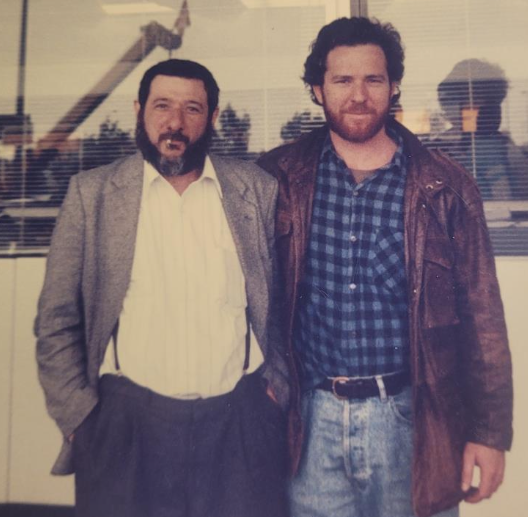
The conditions were raw. "Most treatments were under rag tag conditions and severe poverty," Wachtel recalls. For cardiac monitoring and blood work, patients were instructed to visit emergency rooms and claim a heart attack was imminent. Wachtel's role included "going over health screening data, continuously monitoring patients' vital signs, cleaning their vomit and accompanying them to the bathroom." Addicts paid little — just enough to cover costs — with wealthier patients subsidising the treatment of penniless ones. The main patient transport route was via Pakistan Airlines from New York to Amsterdam's Schiphol Airport.
A key early milestone came in May 1990, when Sisko treated Nico Adriaans, founder of the Dutch Junkiebond (Addicts' Union) in Rotterdam, during that city's liberation festivities. Adriaans was filmed after treatment throwing his cigarettes out of a window and praising ibogaine for eliminating his withdrawal symptoms entirely. The treatment launched a wave of grassroots ibogaine use in Rotterdam — particularly around "Platform Zero," the major gathering spot for dealers and users near the train station — with Adriaans providing ibogaine to other addicts, and Geerte Frenken treating further patients in her apartment.
Enter Professor Jan Bastiaans
The Group's growing body of case studies attracted the attention of Professor Jan Bastiaans — then recently retired as Chair of Psychiatry at Leiden University and already a legendary figure in European trauma medicine. Bastiaans had spent decades treating World War II survivors with LSD, coining the term "KZ-syndrome" for what we now call PTSD. Dutch medical historian Leo van Bergen described Bastiaans' prominence as "a position in the field of psychotraumatology in the 1970s that certainly transcended that of people like Anthony Fauci at the time of the COVID-19 pandemic."
Introduced to the Group by addiction researcher Charles Kaplan of Erasmus University Rotterdam, Bastiaans observed his first ibogaine treatment in a shabby Amsterdam apartment in 1990, alongside NIDA's Carlo Contoreggi. He was impressed. He subsequently joined treatments first as an observer, then as a counseling psychiatrist, and eventually as sponsoring physician. Of the first 40–45 treatments conducted in the Netherlands between 1989 and 1993, 18 took place under his auspices. Bastiaans interviewed patients before and after treatment, observing the first few hours and returning the following day for post-treatment examination.
Crucially, Bastiaans recognised ibogaine's potential for healing trauma — not just interrupting addiction — before almost anyone else. He saw in ibogaine a powerful pharmacological agent capable of achieving what he had long sought to achieve with LSD: liberation from addiction, trauma, and guilt simultaneously.
Boaz Wachtel and Israel's Role
Wachtel's cooperation with the Group eventually resulted, in 2003, in the publication of the first Manual for Ibogaine Therapy: Screening, Safety, Monitoring & Aftercare, co-authored with Howard Lotsof. This codified the treatment protocols that today's clinicians still reference. He went on to co-found the Global Ibogaine Treatment Alliance and has pioneered ibogaine advocacy in Israel for over three decades.
The Modern Era
The 2020s have brought an explosion of rigorous scientific interest in ibogaine. The landmark Stanford study of 2024, published in Nature Medicine, provided the strongest clinical evidence yet: over 80% of veterans treated with the magnesium-ibogaine protocol were within the healthy range for PTSD, depression, and anxiety at one and six months post-treatment. Texas's $50 million investment in ibogaine clinical trials in 2025 signals that governments are beginning to take ibogaine seriously as a mainstream therapeutic option.
As Wachtel writes in his firsthand account of this period: "Bastiaans' insights on the connection between ibogaine, trauma and addiction had proven to be ahead of everyone else. As far as I'm concerned, 'ahead of his time' was the defining narrative of his life." The same could be said of Howard Lotsof — and of the small group of visionaries who built the ibogaine movement from almost nothing.
Israel — home to some of ibogaine's earliest pioneers, with world-class medical institutions, a progressive tradition of drug policy reform, and an urgent national mental health crisis — is uniquely positioned to be a global leader in ibogaine-assisted therapy. That is the mission of the Ibogaine Foundation of Israel.